Press release No. 18/25 - Asse

BGE examines situation regarding intermediate-level radioactive waste in Asse

12/01/2025: Initial images and measurement data have been recorded in emplacement chamber 8a at the 511-metre level in order to plan retrieval

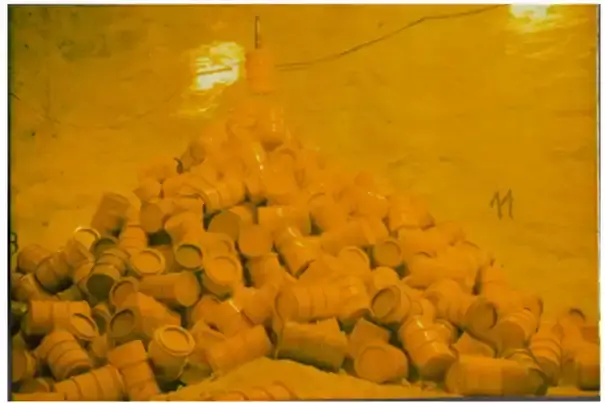
On 19 November 2025, the Bundesgesellschaft für Endlagerung (BGE) used a camera to look into emplacement chamber 8a at the 511-metre level for the first time in several decades in order to assess the drums that were emplaced there 50 years ago as well as the chamber itself.

These investigations form part of the exploration programme that the BGE is conducting in several emplacement chambers in order to define the planning parameters for the retrieval of radioactive waste.

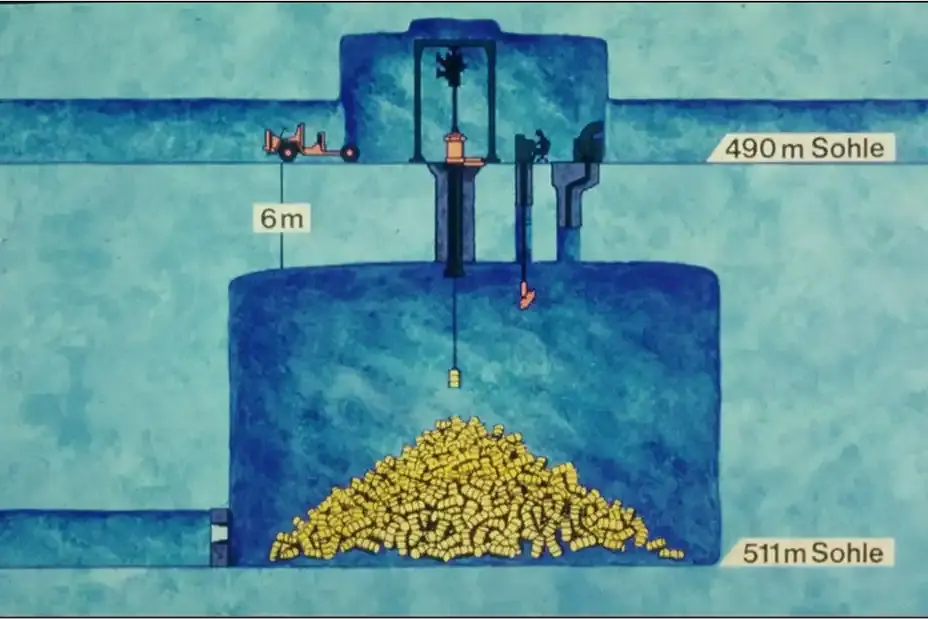
The application to explore the chamber of intermediate-level waste (ILW) was submitted back in 2018. It took several years to complete the planning and approval process, followed by the implementation of the approval and boundary conditions, such as the installation of a new state-of-the-art filter system, including expert inspections with the nuclear regulatory authority. An existing borehole from the emplacement period was used to lower the camera into the chamber. This borehole connects the loading chamber with the emplacement chamber, which is located approximately 5 metres below the loading level. In order to carry out this work, the borehole was physically separated from the rest of the mine cavities using a tent structure. The ILW chamber is kept at negative pressure, such that no radioactivity can enter the mine cavities through the borehole, which is open during the process of inspection with the camera. The work was carried out with strict radiation protection monitoring.

Video of the camera inspection

“The first images show that fragments of loose roof rock have fallen onto the drums from a height of over 10 metres. Nevertheless, most of the drums still appear to be in good condition and intact. Although some are dented and deformed, they haven’t ruptured and no waste has fallen out. We now need to evaluate what this means for retrieval planning,” says Iris Graffunder, Chair of the BGE Management Board.

3D scanning and measurements

In addition to the camera footage, a 3D scan was made of the chamber using a probe lowered through the borehole to the level of just below the chamber roof. These measurement points are now being used to create a 3D model.

In addition, dose rate measurements were taken using a suspended wired probe. At the location where staff were working on the loading level, the dose rate was a maximum of 0.022 millisieverts per hour (mSv/h) at floor level above the open borehole. Dose rates of just over 10 mSv/h have now been measured at the chamber roof. A maximum dose rate of 167 mSv/h was measured near the pile of drums in the chamber. In 1996, the documented dose rate above the pile of drums was still around 400 mSv/h. The lower value today is due to the decay behaviour of the radioactive waste. When measurements are taken above the pile of drums, the dose rates of the drums beneath are only partially recorded. It is not therefore possible to give a precise figure for the maximum dose rate within the pile. In 1996, a value of 7.3 sieverts per hour (Sv/h), or 7,300 mSv/h, was measured between the drums. The BGE must evaluate the findings thoroughly. Here, the main focus is on the stability of the chamber roof. In addition, the actual situation is to be compared with the underlying planning constraints that formed the basis for the existing draft plan for drum retrieval from the ILW chamber.

Background information on emplacement chamber 8a

Emplacement chamber 8a, located at the 511-metre level, contains 1,301 drums, of which 1,293 contain intermediate-level radioactive waste and eight contain low-level radioactive waste. The drums were lowered into the emplacement chamber from the loading chamber above through a borehole using a crane system before being released.

The chamber was not backfilled after the waste was emplaced. Emplacement of the ILW drums occurred between August 1972 and January 1977.

In addition to gaining insights for retrieval planning, the investigation was motivated by two events that took place in 2015 and 2017. At that time, elevated levels of radioactivity were measured in the exhaust air filter system, which was installed in the loading chamber above the emplacement chamber in order to clean the extracted air using filters. To clarify the cause of these elevated radioactivity levels, it was necessary to look inside the ILW chamber, which was now finally possible after so many years.