


Radioactive waste for the Konrad repository
The Konrad repository is licensed for a volume of 303,000 cubic metres of packaged low- and intermediate-level radioactive waste (according to the licence: radioactive waste with negligible heat generation). This waste must not exceed a radioactivity of 5 x 10¹⁸ becquerels (5 quintillion decays of atomic nuclei per second) of beta and gamma emitters or 1.5 x 10¹⁷ becquerels (150 quadrillion decays of atomic nuclei per second) of alpha emitters. The radioactivity of the waste destined for Konrad makes up less than one percent of the radioactivity of all waste arising in Germany.
Around two thirds of the radioactive waste destined for Konrad originates from nuclear power plants and industrial nuclear facilities – for example, from the production of fuel elements or the decommissioning of nuclear power plants. A further third of the waste originates from public-sector institutions. This includes not only the material from the decommissioning of GDR nuclear power plants and waste from federal research establishments, but also the waste that the federal states are storing at their collecting depots.
Final disposal conditions for Konrad
The safety analyses produced requirements that must be adhered to during the future delivery of waste containers. These requirements have been enshrined in the final disposal conditions for Konrad, and compliance with them is monitored within the framework of product control: waste containers can only be emplaced if they have undergone product control by the BGE and been approved for final disposal.
Requirements for waste containers
The radioactive waste must be professionally packaged in approved containers before it can be loaded, transported and ultimately placed in final disposal. The waste containers must be delivered in an unpressurised state. Another requirement is strict compliance with all radiation protection limit values. This is checked on delivery. Only perfect containers may be placed in final disposal.
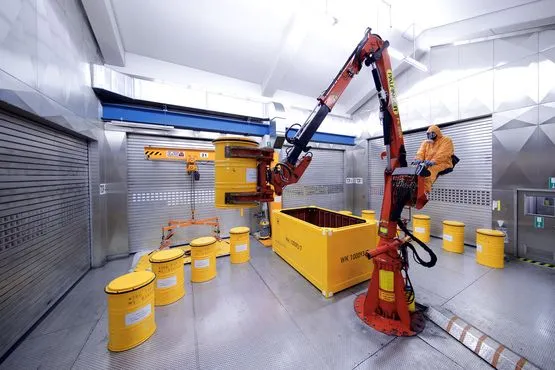
Radioactive waste must be professionally processed and packaged for final disposal

As seen here in Lubmin, radioactive waste must be stored in approved and monitored interim storage facilities until final disposal