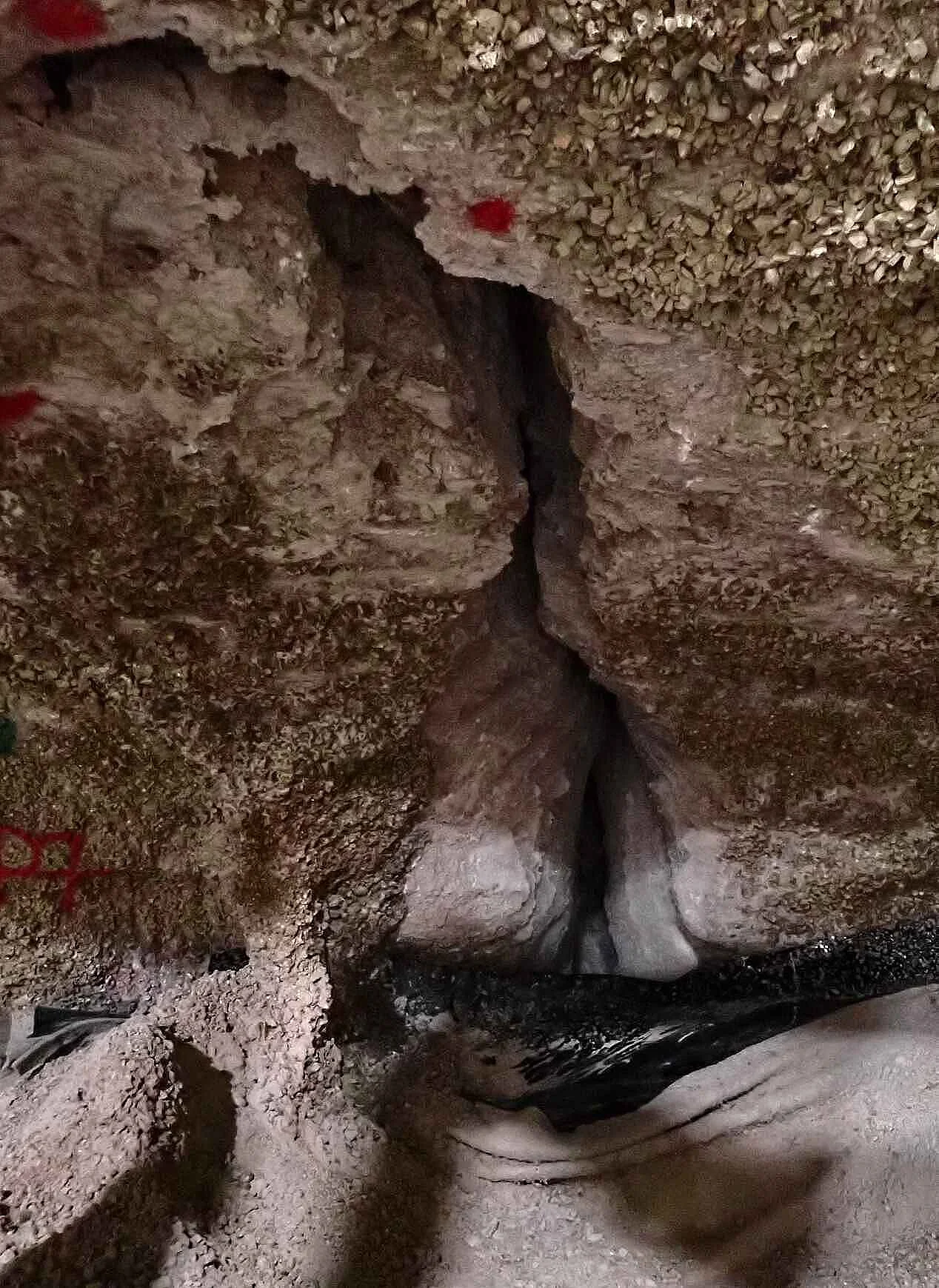
Stable collection of solution in the Asse II mine is an essential prerequisite for working safely underground and, consequently, for the retrieval of the radioactive waste. “Until now, our models have assumed that the salt solution seeping into the Asse mine moves slowly downwards through small cracks in the loosened salt rock. These models now need to be adjusted. Based on the latest findings, we can assume that the fissure encountered in excavation 3/658 is the main flow path for the salt solution, which remains saturated with rock salt,” says Dr Ralf Holländer, head of the Geosciences department.
The solution-bearing fissure had been discovered during restoration work in the area of the former main collection point on the 658-metre level. When the main collection point was set up in 1997, this fissure did not yet exist. It remains unclear when it was formed, but the decline in collection rates at the former main collection point in 2024 is linked to its formation, as the salt water flow has since shifted and bypassed the old containment liner. “The shape and surface of the fissure suggest that it was formed by processes involving the flow of salt solution, combined with material erosion. This can lead to changes in the path of the fissure,” explains Dr Holländer. Since the BGE began collecting the salt solution directly at this fissure, it has once again been able to collect around 12.5 cubic metres per day in this area. The collection rates at the lower levels have fallen back to their previous level of around 0.5 cubic metres per day.
In light of the new findings, the BGE has updated its flow pathway model. Further research will be needed to determine the specific implications of these changes. It is not possible to make any definitive statements at this stage. What is certain is that the BGE must continue to examine, plan and implement further measures to ensure stable solution collection in future in order to enable safe working conditions at the Asse II mine.